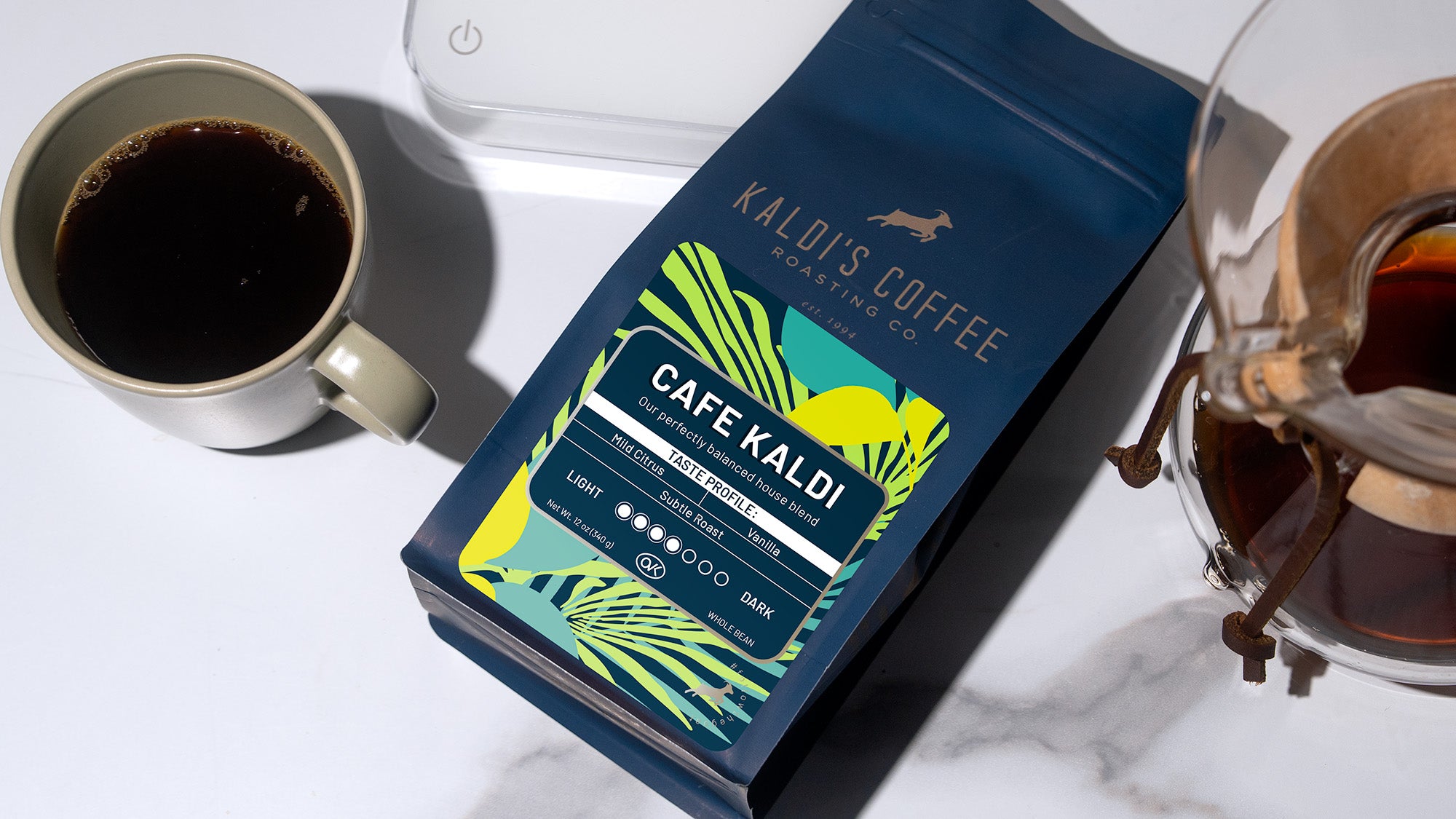
For over 25 years, we've been fortunate enough to talk and teach coffee to wholesale customers, baristas-in-training, and our loyal in-cafe guests. It's been a fascinating journey, as once widely accepted thoughts and theories were systematically proven incorrect and the internet has allowed exponential advances in collaboration and communication. But throughout the countless conversations we've had, we've always welcomed any and all questions and sought to clarify — and demystify — some facts surrounding this extraordinary beverage to the best of our ability.
Here, we've chosen five of the most common questions. We hope these help keep the conversation moving along toward a better understanding of the coffee we all love.

Question 1: Is hotter coffee better coffee?
Answer: Not really, especially not specialty coffee. Some of the best sweetness and clarity comes at lower temperatures.
We hear this question across the counter explicitly and in subtext, and it’s easy to see how this myth persists: from canteens and carafes that market their ability to keep coffee piping hot all day, to airpots with heating elements, preserving the brew temperature of coffee — 195–205 degrees Fahrenheit — is a goal that still exists in the coffee industry.

We absolutely want to serve you coffee as close to its brewing temperature as possible, and you should want your coffee to stay hot until you’re ready to drink it. However, when it comes time to actually put a cup to your lips, even the low end of coffee’s brew temperature is far too hot to drink.
Let’s look at some characteristic temperatures and their effects on the tongue:
| Coffee temperature | Likely sensory experience |
|---|---|
| 185 degrees Fahrenheit and above | Scalding or burns may occur. |
| 175–185 degrees Fahrenheit | Mostly aroma and heat are perceived, with little actual flavor. |
| 155–175 degrees Fahrenheit | Higher levels of bitterness are perceived, along with some sweetness. |
| 120–140 degrees Fahrenheit | Sweetness and acidity are perceptible with a fuller range of flavors. |
When we cup coffee, we’ll taste it all the way through this spectrum. We actually wait at least 7–8 minutes after the coffee has completed its core brewing portion — about 4 minutes — before taking our first sip, and sips occur for many minutes beyond this, even at room temperature. Cupping is a fun exercise at home too, as even a single coffee’s characteristics will change as temperature drops.
An added benefit is that you can decide where on the spectrum you enjoy your coffee the most. And you should also know that if a diner or a gas station is keeping your coffee on a hot plate and serving it to you over 175 degrees, they probably don’t want you to be able to taste what’s in your mug. Foods that are really cold or really hot tend to skip over the palate.
Question 2: Are espresso blends only for making espresso?

Answer: Espresso blends are simply designed to excel in the espresso brewing process, but are usually delicious no matter how you brew them.
This question is wrapped up in two classic coffee misunderstandings: first, that espresso is a type of coffee bean and second, that espresso blends should only be used to make espressos.
The first myth really is a misunderstanding borne out of late 90s and early 2000s marketing of coffee, as the coffee industry tried to capitalize on the rise of espresso-based milk drinks. Companies, wanting to emphasize their intentional roasting and blending of beans, branded them with specific labels and descriptions, which led to confused conversations around espresso.
To be clear, “espresso” beans are just like any other coffee beans on a biological level. They are, however, typically roasted or blended in certain ways to aid in their extraction on espresso machines, meet a flavor expectation for espresso, or pair with milk-based drinks that make up the vast majority of espresso bar orders.
Does this mean that espresso blends should only be used to make espressos? Not at all. If you like balanced, smooth cups of coffee that are versatile enough to enjoy black or with a creamer, brewing an espresso blend might make you the happiest home brewer. Our 700 blend is an example of a blend originally conceived of as a house espresso that holds its own when brewed in a machine or by hand.
Question 3: Is coffee really a bean?
Answer: Coffee is actually the roasted seed of a fruit, called a coffee cherry.
This common misconception is one the entire industry has to hold its hands up and take responsibility for. All coffee “beans” are seeds, but not all seeds are beans, and surprise, we’ve all been saying the wrong thing for as long as anyone can remember.

Coffee is a seed that lives inside of a fruit on a tree, but is not biologically a bean. Because coffee plants live outside the family Leguminosae, they never were beans. But we still call them beans, you can still call them beans, and we can all be technically wrong together for the sake of common usage. Let’s just celebrate this myth’s survival.
Question 4: Are the flavor notes on my coffee bag artificially added?
Answer: Flavor notes are not artificially added. Instead, think of them as “this coffee reminds us of,” and they are derived from elements found naturally in the coffee.
Another misconception could be attributed to the rise of coffee in the 1990s. When Gloria Jean’s ruled the mall and flavored beans were available everywhere you looked, bold descriptors like “Vanilla Almond” or “Caramel Pecan” were common. To be fair, today you might find a bag with tasting notes labeled caramel or toasted pecan, but if it isn’t specifically labeled as flavored coffee, those notes are actually descriptors for flavors that have been tasted in the coffee’s brew.

At Kaldi’s, once we’ve received a new coffee from origin and dialed in its roast profile through sample roasting, we put our heads together in our cupping lab to zero in on its flavor notes. This process lets us get a wide array of notes, align our palates, and come to a consensus on what you’re most likely to taste from each unique coffee we sell. Those are the notes that wind up on your bag of beans — no flavors added.

Read more about how we break down the flavor of our single-origin coffees in “Spider Charts and Flavor Calls: How to Choose Your Next Single Origin Coffee.”
Question 5: Do darker roasts have more caffeine?
Answer: From a per-bean basis, no. But you may end up using more beans to make a dark roasted brew, which can lead to more caffeine in your final cup.
Do darker roasts have the most caffeine? Not really, but also, if you’re brewing them correctly, yes. Let’s unpack this one some more. Borne out of bold flavors, masculine tropes, and misinformation, caffeine content’s relationship with roast level has been misunderstood over the last few decades and continues to be a problematic topic of conversation. The bold hit of a dark roast has been confused at times with both the eye-watering sensation of an over-extracted brew and coffee served too hot to taste.

We know that in question 1, coffee over 155 degrees is liable to taste more bitter, and it’s important to draw out how bitterness has been confused with caffeine content. Caffeine itself is an alkaloid that has been shown to be inherently bitter, as well as being absorbed directly by bitter taste receptors on the tongue. Caffeine is found throughout the whole body of a coffee plant, and helps the plant fight off insects and compete with other plants, essentially acting as a natural insecticide.
In the past, overly hot, bitter coffees have been called “strong,” and the ability to tough it out through such a harsh cup has become almost a badge of honor to show how tough you are. The reality is that these too-hot-to-taste coffees are made from lower quality beans, and their bitterness is often amplified by improper extraction.

The actual difference in caffeine content between dark roasts and light roasts is negligible, if you’re comparing two beans of the same coffee, roasted at different levels, to each other. This means that if you’re still scooping your coffee like it’s 1999, there really isn’t much difference between a light and a dark roast. But coffee professionals have recommended weighing your coffee for decades, which means that instead of brewing coffee by volume, like with a scoop, you might actually be brewing by mass.
And here we come to the heart of the matter: as coffee progresses from lighter to darker in roast level, it loses mass, as mostly moisture content is shed. It does not, however, lose any caffeine. Your roaster would essentially have to burn your coffee into near ash to break down caffeine molecules. This, of course, means that when you go to brew coffee using a scale to find the perfect brew ratio, you’re actually using more individual dark roasted coffee beans, and those beans haven’t lost any of their caffeine content in the roasting process. That means two brews using the same amount of coffee by weight can produce cups with different caffeine content, with the darker roast serving up to 30% more caffeine to your tired eyes.
Here’s more on this research from Sprudge.

Summary
So, to sum things up:
- Hotter coffee does not make for better tasting coffee, assuming your coffee tastes good to begin with.
- Espresso blends can be used for any type of coffee preparation.
- “Coffee bean” is a misnomer. Coffee comes from the seed of a fruit.
- Flavor notes found on most coffee bags — and in particular our single-origin offerings — are not artificially added. They are another way of saying, “this coffee reminds me of…”
- Darker roasted coffee can have more caffeine in a finished cup than a light roast, but it’s not the roast that gives it more caffeine. You’re just using more coffee.
We want to make great coffee accessible, and we welcome any and all questions. So, what questions do you have? Hit us up on Instagram or Facebook, and let’s talk coffee.